“Cybersecurity is one of the primary battlefields of the 21st century.”
— Tyler N., CCP, CCA, CSCI Cybersecurity Assessor
In today’s world, war is no longer fought only with weapons or troops. It is waged through data, algorithms, and access. From blueprints and logistics to communications and financial systems, America’s defense supply chain represents one of the most targeted digital ecosystems on the planet. Every contractor, large or small, plays a role in protecting it.
That is why the Department of Defense (DoD) created the Cybersecurity Maturity Model Certification (CMMC). After years of anticipation, revision, and speculation, CMMC is no longer a talking point. It is a reality.
What Is CMMC?
CMMC is a unified cybersecurity framework developed by the DoD to ensure that every company working with the federal government meets specific, verified security standards. It requires organizations handling Controlled Unclassified Information (CUI) or Federal Contract Information (FCI) to demonstrate that they can safeguard that data against increasingly sophisticated threats.
For years, contractors simply self-attested that they met the cybersecurity controls outlined in NIST SP 800-171. Now CMMC changes that by replacing self-attestation with verified, auditable proof that systems and processes meet the mark.
At its core, CMMC is not just about compliance. It is about establishing trust and ensuring that sensitive information shared across the Defense Industrial Base (DIB) remains secure from adversaries determined to exploit it.
Levels of Maturity: From Foundational to Expert
CMMC is structured into three progressive levels of security maturity.
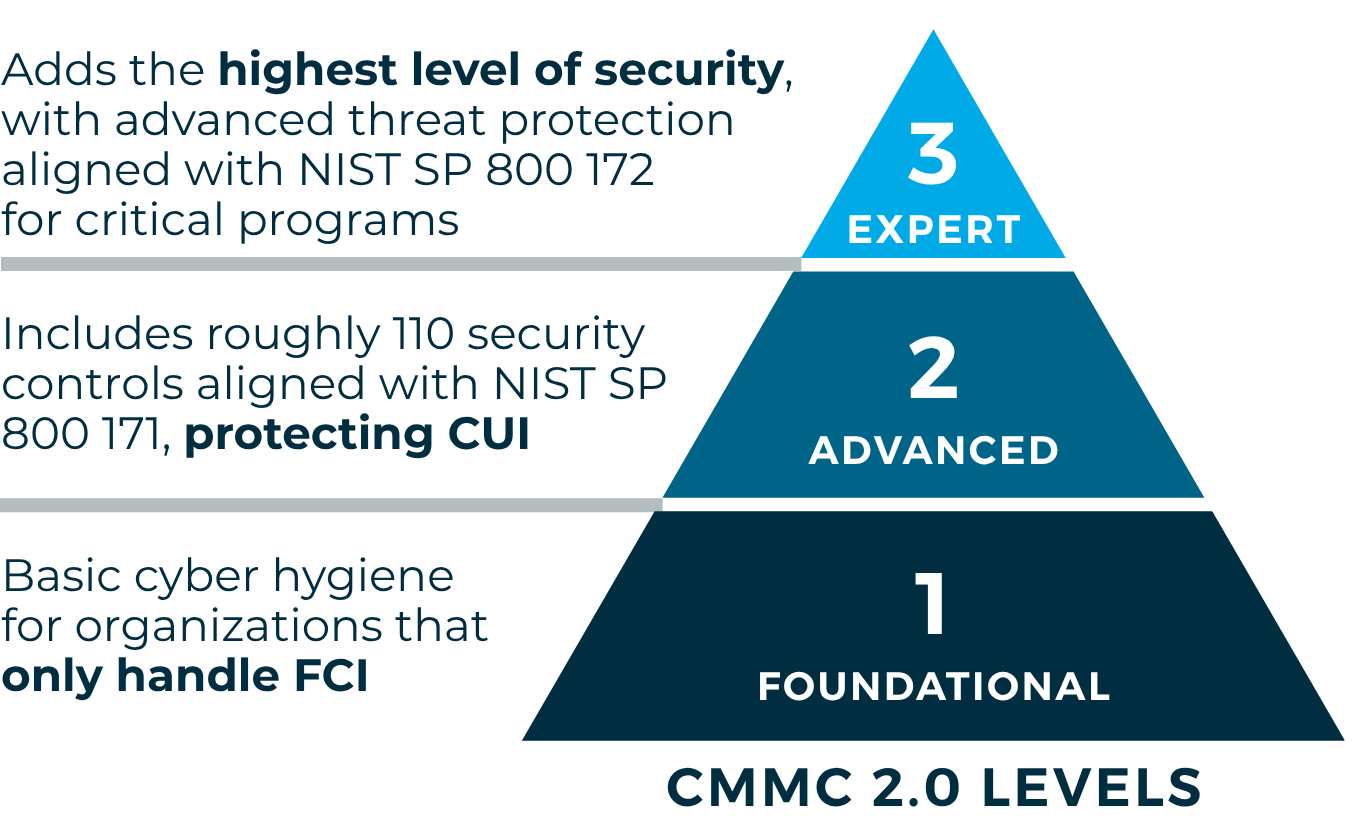
Understanding where your organization falls within this structure matters. The certification level you hold determines your eligibility for specific contracts and your standing as a trusted partner in the defense ecosystem. In a marketplace defined by security expectations, your level is not just a measure of compliance. It is a measure of credibility.
Years in the Making, Now a Turning Point
CMMC has been a long time coming. For years, it existed as a concept built on good intentions and early pilot programs, but 2025 marks the moment it becomes real. The framework that once lived on paper is now written into the contracts that drive our national defense.
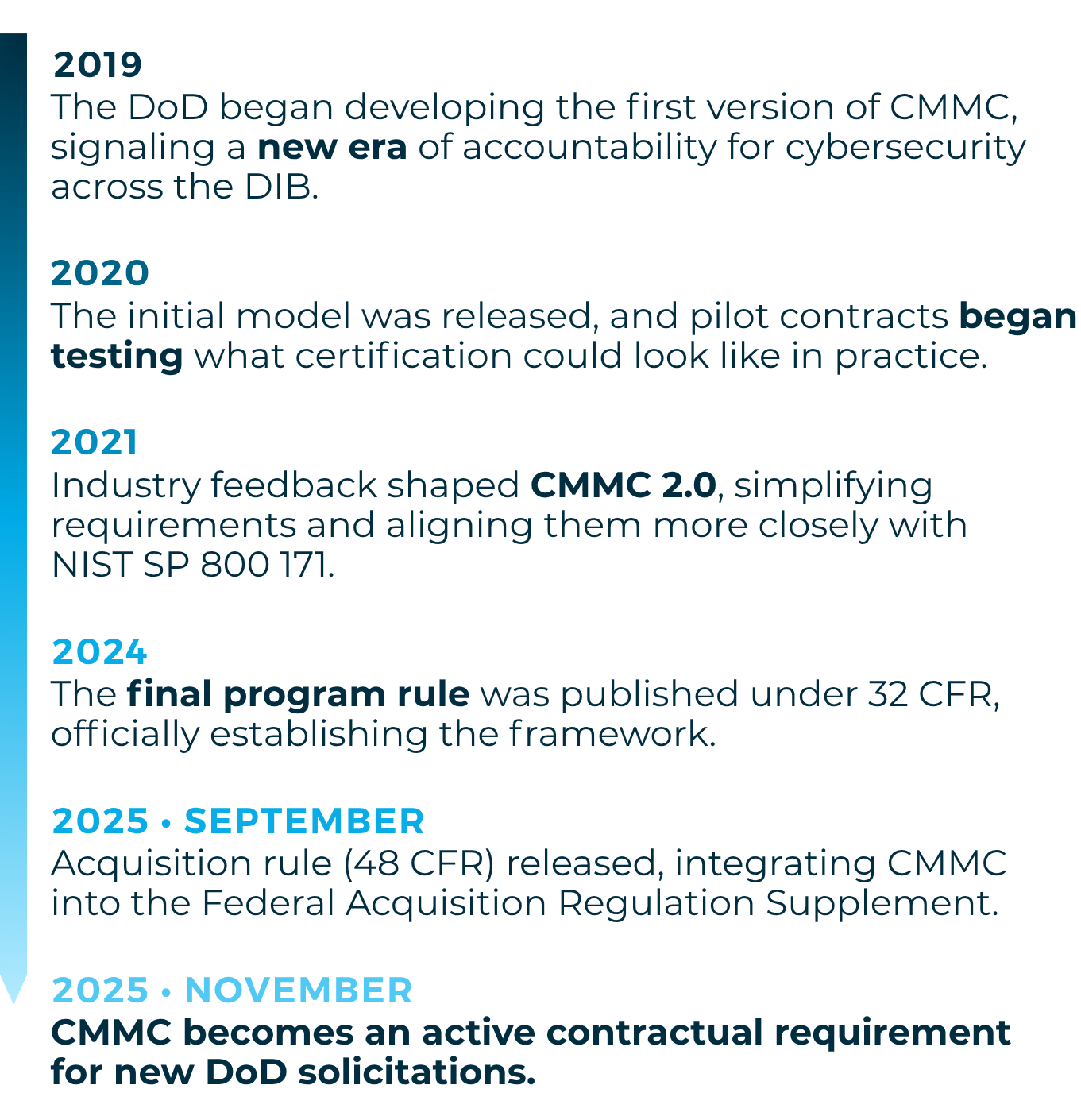
For years, compliance was more conversation than consequence. That changes now. With the rule officially in effect, CMMC is no longer a distant requirement. It is the new baseline for doing business with the DoD.
By August 2025, only about 270 organizations nationwide had achieved certification. That number represents less than one percent of the DIB.
The result is a clear dividing line between those who have proven cybersecurity maturity and those still preparing for it.
This moment is not only about accountability. It reflects a broader truth. The front lines of defense have moved into the digital realm. Protecting information has become just as vital as protecting infrastructure. The contractors that treat cybersecurity as a national security mission, not a compliance checklist, will define the next generation of trusted defense partners.
What Certification Really Signals
Achieving certification tells customers, government partners, and teammates that your organization is secure, resilient, and ready to defend what matters most.
- Your data is protected. Systems meet the same rigorous standards expected across defense agencies.
- You are resilient. Teams can detect, prevent, and recover from cyber threats with speed and precision.
- You are dependable. Partners can share information and collaborate with confidence.
- You are forward looking. Certification reflects leadership and a proactive commitment to national security.
“Even the smallest defense contractors are targets,” Tyler N. reminds us. “With the rise of artificial intelligence (AI) and automation, adversaries can mine sensitive information faster than ever. That is why a framework like CMMC is not optional. It is essential.”
CMMC is more than a technical audit. It is a reflection of culture. It demonstrates that cybersecurity is everyone’s responsibility, from the engineers designing systems to the employees opening emails. A secure organization is a collective effort — and certification makes that effort visible.
Conclusion: The New Measure of Readiness
The November 10th, 2025, milestone represents more than a date on the calendar. It marks a cultural shift across the DIB. No longer can cybersecurity be delegated or delayed. It has become the new measure of readiness.
For defense contractors, this is the moment to lead by example. For customers and government partners, it is reassurance that data shared within the supply chain remains protected. For associates, it is a reminder that every login, every decision, and every process contributes to national security.
At CSCI, we believe that protecting information is protecting people. As the landscape evolves, we remain committed to advancing cybersecurity awareness and championing the standards that keep our nation secure. Because when every organization strengthens its defense, we all stand stronger together.